AI Enhances Health Insights from Routine CT Scans

Edited by Vita Solenne
Research & Biotech · Updated October 20, 2026
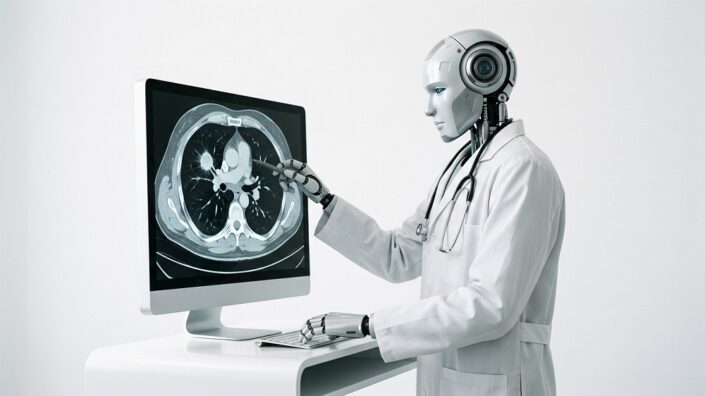
A recent study indicates that routine CT scans can reveal a broader spectrum of health conditions than previously recognized, including some not typically diagnosed through imaging. The next phase of research will involve direct comparisons with human radiologists to validate these findings.
Share this story
Why it matters
- ✓Enhanced diagnostic capabilities could lead to earlier detection of health issues, allowing for timely interventions.
- ✓Increased insights from routine scans may help health optimizers and biohackers monitor their health more effectively.
- ✓The potential for AI to identify conditions beyond traditional imaging could revolutionize preventive health strategies.
AI Enhances Health Insights from Routine CT Scans
Introduction
Recent advancements in artificial intelligence (AI) are transforming the landscape of medical diagnostics, particularly in the realm of imaging. A new study has highlighted the potential of routine computed tomography (CT) scans to provide a wealth of health information, extending beyond the conventional diagnoses typically associated with these imaging techniques. This development could have significant implications for individuals focused on health optimization and longevity.
The Study's Findings
The study suggests that routine CT scans can uncover a variety of health conditions, some of which may not be detectable through traditional imaging methods. This capability is particularly noteworthy as it indicates that CT scans, often used for specific diagnostic purposes, could serve a dual role in broader health assessments. The researchers are now looking to compare the AI's findings with those of human radiologists, which will be crucial in establishing the reliability and accuracy of the AI's insights.
Implications for Health Optimizers and Biohackers
For individuals dedicated to health optimization and longevity, the implications of these findings are profound:
- Early Detection: The ability to identify a wider range of health conditions through routine scans could lead to earlier interventions. Early detection is a cornerstone of effective health management, particularly for chronic diseases that can significantly impact longevity.
- Comprehensive Health Monitoring: Health optimizers often seek detailed insights into their health status. The enhanced diagnostic capabilities of AI could provide a more comprehensive view of an individual's health, allowing for tailored health strategies and interventions.
- Revolutionizing Preventive Health: The potential for AI to identify conditions that are not typically diagnosed through imaging could change the approach to preventive health. By recognizing issues earlier, individuals can adopt proactive measures to mitigate risks and enhance their overall well-being.
The Role of AI in Diagnostics
AI's integration into the field of diagnostics is not merely a trend; it represents a significant shift in how healthcare is approached. By leveraging machine learning algorithms, AI can analyze vast amounts of data from imaging studies, identifying patterns and anomalies that may escape human observation. This capability is particularly valuable in radiology, where the volume of scans can be overwhelming for human radiologists.
The study underscores the importance of ongoing research in this area. As AI continues to evolve, its ability to provide nuanced insights into health conditions will likely improve, leading to more accurate and timely diagnoses. The next step in this research will involve direct comparisons with human radiologists, which will be essential for validating the AI's findings and ensuring that these advancements translate into real-world benefits for patients.
Conclusion
The findings from this study represent a promising development in the intersection of AI and healthcare. For those pursuing longevity and health optimization, the potential to gain deeper insights from routine CT scans could lead to more effective health management strategies. As research progresses, it will be crucial to monitor how these advancements are implemented in clinical practice and their impact on patient outcomes. The future of diagnostics may very well be shaped by the synergy between human expertise and artificial intelligence, paving the way for a new era in preventive health care.
Sources
Newsletter
Your weekly longevity signal. No spam.
Comments
Log in with
Loading comments…
More in Biotech

Life Biosciences Reports Initial Results from the First Reprogramming Trial
Life Biosciences has announced initial results from its first trial focusing on partial epigenetic…
18h ago

Fractyl Revita Shows Promise in Reducing Weight Regain After GLP-1 Therapy
Fractyl Health has announced positive results from the REMAIN-1 pivotal study, which evaluated the…
1d ago

Exploring the Connection Between Big Pharma and Gray-Market Peptides
A recent analysis reveals significant ties between the pharmaceutical industry and gray-market…
3d ago
Kailera Completes Enrollment for Obesity Trials, Results Expected in 2028
Kailera has completed enrollment for its three Phase 3 trials of ribupatide, a weekly injection…
4d ago