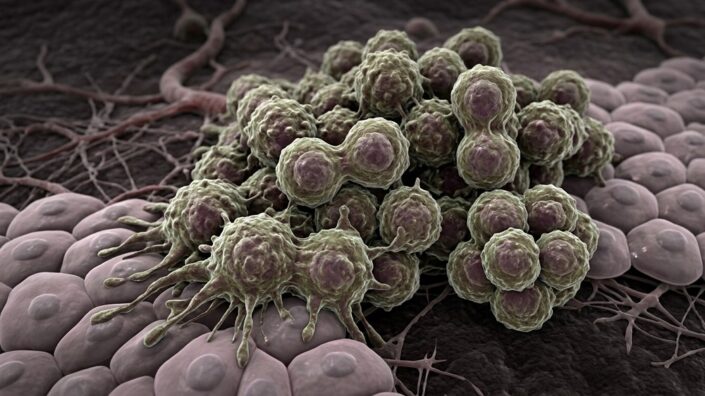
Challenges in Targeting Cancer Genes: New Insights from Recent Research

Edited by Vita Solenne
Research & Biotech · Updated September 4, 2026
A recent study has revealed that turning off cancer genes may not be as effective as previously thought, as cancer cells can adapt and survive even after oncogene withdrawal. This adaptability may lead to more aggressive cancer forms, complicating treatment strategies. Understanding these mechanisms is crucial for developing more effective cancer therapies.
Share this story
Why it matters
- ✓This research highlights the complexity of cancer biology, emphasizing that simply targeting oncogenes may not be sufficient for effective treatment.
- ✓For longevity and health optimization enthusiasts, it underscores the importance of a multifaceted approach to cancer prevention and treatment.
- ✓Insights from this study could inform future strategies in cancer therapy, potentially leading to better outcomes for individuals at risk.
Challenges in Targeting Cancer Genes: New Insights from Recent Research
Introduction
Cancer remains one of the leading causes of death worldwide, and researchers are continually exploring innovative ways to combat this complex disease. A recent study has shed light on the challenges associated with turning off cancer genes, revealing that this approach may not always yield the desired results. This article delves into the findings of the study and discusses their implications for longevity enthusiasts and health optimizers.
Understanding Oncogenes and Cancer
Oncogenes are mutated forms of normal genes that, when activated, can promote cancer cell growth and proliferation. Targeting these oncogenes has been a primary strategy in cancer treatment, with therapies designed to inhibit their activity. However, this new research suggests that simply turning off these genes may not be enough to eradicate cancer cells.
The Role of Senescence in Cancer Survival
The study examined the phenomenon of cellular senescence, a state where cells cease to divide but remain metabolically active. It was found that cancer cells could enter a senescent state after oncogene withdrawal, allowing them to survive and potentially become more dangerous. This survival mechanism raises concerns about the effectiveness of current therapies that rely solely on targeting oncogenes.
Temporary Blocking Techniques
Many existing cancer treatments employ temporary blocking techniques to inhibit oncogene activity. However, the study suggests that these methods may not lead to long-term solutions. Instead of dying off, cancer cells may adapt by entering a senescent state, where they can persist and even contribute to tumor recurrence or metastasis.
Implications for Cancer Treatment
The findings of this study have significant implications for cancer treatment strategies.
Rethinking Treatment Approaches
- Combination Therapies: The research indicates that a multifaceted approach may be necessary to effectively combat cancer. This could involve combining oncogene-targeting therapies with treatments that address the mechanisms of cellular senescence.
- Long-Term Monitoring: Patients undergoing treatment may require long-term monitoring to detect any signs of cancer recurrence or the emergence of more aggressive cancer forms.
- Personalized Medicine: Understanding the unique biology of each tumor could lead to more personalized treatment strategies, enhancing the effectiveness of therapies.
Conclusion
The study highlights the complexities of cancer biology and the challenges associated with targeting oncogenes. For those pursuing longevity and health optimization, these insights underscore the importance of adopting a comprehensive approach to cancer prevention and treatment. As research continues to evolve, it is crucial for individuals to stay informed about the latest findings and consider their implications for health and longevity.
By understanding the mechanisms behind cancer cell survival and the limitations of current therapies, longevity enthusiasts can better navigate their health journeys and make informed decisions about cancer prevention and treatment strategies.
Sources
- Why Turning Off Cancer Genes Doesn’t Always Work — Lifespan.io
Newsletter
Your weekly longevity signal. No spam.
Comments
Log in with
Loading comments…
More in Research

Advancements in Cancer Science: Prevention, Detection, and Treatment Insights from Siddhartha Mukherjee
In a recent discussion, Dr. Siddhartha Mukherjee highlighted the evolving understanding of cancer,…
6h ago

Age-Related Decline in Chapero
The latest Fight Aging! newsletter discusses the age-related decline observed in the Chapero, a…
23h ago
Exploring the Link Between Socioeconomic Status and Life Expectancy
A recent analysis investigates the correlation between socioeconomic status (SES) and life…
2d ago

Blocking STING Helps Preserve Bone in Aging Mice
A recent study has identified a link between STING-mediated signals from marrow fat cells and…
2d ago