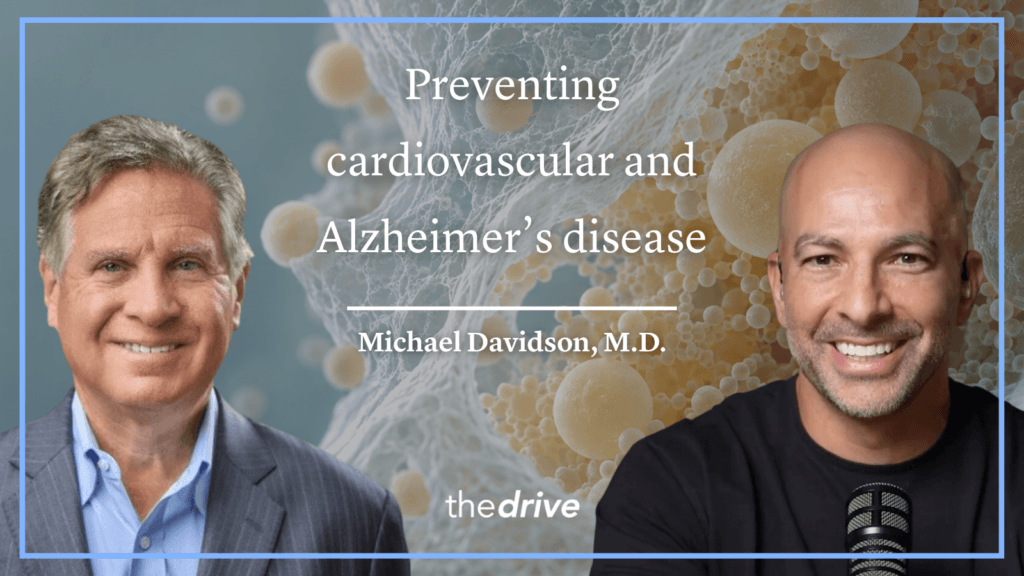
Early LDL Management Key to Preventing Cardiovascular Disease and Alzheimer's

Edited by Vita Solenne
Research & Biotech · Updated September 14, 2026
Dr. Michael Davidson emphasizes the importance of lowering LDL cholesterol levels early in life to prevent cardiovascular disease and Alzheimer's. He argues that current medical knowledge allows for effective prevention strategies, but there is resistance to implementing these strategies in younger populations. This approach is particularly relevant for individuals with the APOE4 gene variant, which increases the risk for these diseases.
Share this story
Why it matters
- ✓Implementing early LDL management can significantly reduce the risk of developing cardiovascular diseases and Alzheimer's, crucial for longevity.
- ✓Understanding genetic predispositions like APOE4 can help tailor preventive strategies for individuals.
- ✓Adopting these strategies early may lead to better health outcomes and improved quality of life as one ages.
Early LDL Management Key to Preventing Cardiovascular Disease and Alzheimer's
Introduction
In a recent discussion, Dr. Michael Davidson highlighted the critical role of early intervention in managing low-density lipoprotein (LDL) cholesterol levels to prevent major health issues such as cardiovascular disease and Alzheimer's. This conversation, featured in Peter Attia's podcast, underscores the importance of applying existing medical knowledge to younger populations, particularly those at higher genetic risk.
The Importance of Lowering LDL Early
Dr. Davidson argues that we possess the knowledge and tools necessary to prevent heart disease effectively. However, the challenge lies in the application of these strategies at an earlier age. He specifically addresses individuals in their 30s, advocating for proactive measures rather than reactive ones. This perspective is crucial because the earlier one begins to manage LDL levels, the greater the potential to mitigate long-term health risks.
Resistance to Early Intervention
Despite the clear benefits, there is significant pushback against the idea of lowering LDL cholesterol in younger adults. Many healthcare providers and patients may not recognize the urgency or necessity of these interventions until symptoms arise or until they reach an older age. Dr. Davidson's message is a call to action for both patients and practitioners to reconsider their approach to cardiovascular health.
The Role of Genetics: APOE4
Another critical aspect of Dr. Davidson's discussion is the role of genetics, particularly the APOE4 gene variant. Individuals carrying this variant are at a higher risk for developing Alzheimer's disease and cardiovascular issues. Understanding one's genetic predisposition can guide personalized health strategies, making it even more essential for those with APOE4 to monitor and manage their LDL levels proactively.
Tailoring Prevention Strategies
For those with the APOE4 variant, early intervention becomes even more crucial. By lowering LDL cholesterol levels early, individuals can potentially offset some of the genetic risks associated with this variant. This tailored approach to health optimization can empower individuals to take control of their longevity and overall well-being.
Promising New Therapies
In addition to lifestyle changes, Dr. Davidson also discusses the emergence of new therapies aimed at lowering LDL cholesterol. These advancements in biotechnology could provide additional tools for individuals seeking to optimize their health and longevity. As research continues to evolve, staying informed about these therapies will be vital for health optimizers and biohackers alike.
Conclusion
Dr. Michael Davidson's insights serve as a reminder of the importance of early intervention in managing LDL cholesterol levels to prevent cardiovascular disease and Alzheimer's. By understanding the implications of genetic factors like APOE4 and embracing new therapies, individuals can take proactive steps toward a healthier, longer life. For those pursuing longevity and health optimization, adopting these strategies early could make a significant difference in their long-term health outcomes.
As we continue to learn more about the interplay between genetics, lifestyle, and health, it is essential to remain vigilant and proactive in our health journeys.
Sources
Newsletter
Your weekly longevity signal. No spam.
Comments
Log in with
Loading comments…
More in Research

Advancements in Cancer Science: Prevention, Detection, and Treatment Insights from Siddhartha Mukherjee
In a recent discussion, Dr. Siddhartha Mukherjee highlighted the evolving understanding of cancer,…
Just now

Age-Related Decline in Chapero
The latest Fight Aging! newsletter discusses the age-related decline observed in the Chapero, a…
18h ago
Exploring the Link Between Socioeconomic Status and Life Expectancy
A recent analysis investigates the correlation between socioeconomic status (SES) and life…
2d ago

Blocking STING Helps Preserve Bone in Aging Mice
A recent study has identified a link between STING-mediated signals from marrow fat cells and…
2d ago