New Research Highlights Potential for Stem Cell-Derived Molecules in Combating Skin Photoaging

Edited by Vita Solenne
Research & Biotech · Updated September 18, 2026
A recent study published in Aging Cell reveals that a cocktail of molecules from human umbilical cord mesenchymal stem cells (hUC-MSCs) can help mitigate skin photoaging in mice. The research indicates that these molecules restore the cells' ability to eliminate damaged mitochondria, which are linked to sun-induced aging. This finding could have implications for developing therapies aimed at improving skin health and longevity.
Share this story
Why it matters
- ✓Understanding how to clear damaged mitochondria could lead to innovative treatments for skin aging, a common concern among health optimizers.
- ✓The use of stem cell-derived molecules may open new avenues for regenerative medicine and skin rejuvenation.
- ✓This research underscores the importance of mitochondrial health in overall cellular function and longevity.
Clearing Damaged Mitochondria to Fight Skin Photoaging
Introduction
Skin photoaging, primarily caused by prolonged exposure to ultraviolet (UV) radiation, is a significant concern for many individuals seeking to maintain youthful skin. Recent research published in the journal Aging Cell has shed light on a promising approach to combat this issue by utilizing a cocktail of molecules derived from human umbilical cord mesenchymal stem cells (hUC-MSCs). This study highlights the potential of these molecules in restoring cellular functions that are crucial for skin health and longevity.
The Role of Mitochondria in Skin Aging
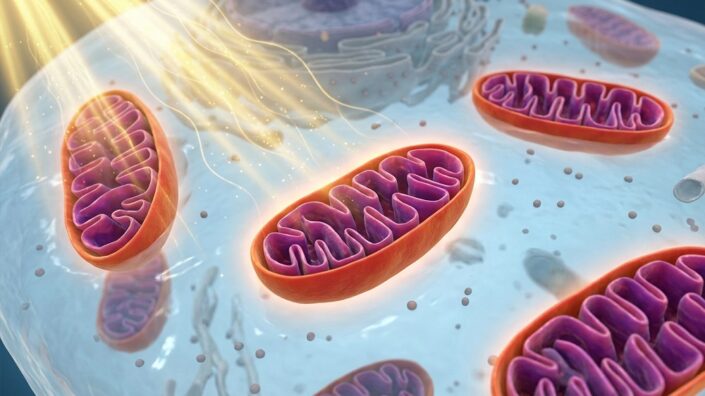
Mitochondria, often referred to as the powerhouse of the cell, play a vital role in energy production and cellular metabolism. However, they are also susceptible to damage from environmental factors, particularly UV radiation. When mitochondria become damaged, their ability to function properly declines, leading to a cascade of cellular dysfunction that contributes to the aging process in skin cells. This phenomenon is known as photoaging, characterized by wrinkles, loss of elasticity, and pigmentation changes.
Findings from the Study
The researchers in the study discovered that a specific cocktail of molecules released by hUC-MSCs can significantly mitigate the effects of photoaging in mice. These molecules appear to enhance the cells' ability to clear out damaged mitochondria, thereby restoring normal cellular function. By improving mitochondrial health, the skin cells can better resist the damaging effects of UV exposure and maintain their regenerative capabilities.
Implications for Longevity Enthusiasts
For individuals focused on longevity and health optimization, the findings from this research offer several important insights:
- Mitochondrial Health: The study emphasizes the critical role of mitochondrial health in cellular function and overall skin vitality. Strategies aimed at enhancing mitochondrial function could be beneficial for those seeking to combat the visible signs of aging.
- Stem Cell Applications: The use of stem cell-derived molecules presents a novel approach to skin rejuvenation. As research progresses, these findings may lead to the development of new therapies that harness the regenerative properties of stem cells to improve skin health.
- Preventative Measures: Understanding the mechanisms behind photoaging can empower individuals to adopt preventative measures against skin damage. This knowledge may encourage the use of protective skincare products and lifestyle choices that support mitochondrial health.
Future Directions
While the results of this study are promising, further research is needed to explore the full potential of hUC-MSC-derived molecules in human applications. Clinical trials will be necessary to determine the safety and efficacy of these treatments in humans, as well as to understand the optimal formulations and delivery methods.
Additionally, researchers may investigate other sources of stem cells and their respective molecules to identify a broader range of options for combating skin aging. As the field of regenerative medicine continues to evolve, the integration of these findings into practical applications for skin health could revolutionize the way we approach aging and longevity.
Conclusion
The study published in Aging Cell represents a significant step forward in our understanding of how to combat skin photoaging through mitochondrial health. By leveraging the power of stem cell-derived molecules, researchers are uncovering new possibilities for enhancing skin vitality and longevity. As we await further developments in this area, individuals interested in health optimization should consider the implications of mitochondrial function and the potential benefits of emerging regenerative therapies.
Sources
- Clearing Damaged Mitochondria to Fight Skin Photoaging — Lifespan.io
Newsletter
Your weekly longevity signal. No spam.
Comments
Log in with
Loading comments…
More in Research

Advancements in Cancer Science: Prevention, Detection, and Treatment Insights from Siddhartha Mukherjee
In a recent discussion, Dr. Siddhartha Mukherjee highlighted the evolving understanding of cancer,…
5h ago

Age-Related Decline in Chapero
The latest Fight Aging! newsletter discusses the age-related decline observed in the Chapero, a…
23h ago
Exploring the Link Between Socioeconomic Status and Life Expectancy
A recent analysis investigates the correlation between socioeconomic status (SES) and life…
2d ago

Blocking STING Helps Preserve Bone in Aging Mice
A recent study has identified a link between STING-mediated signals from marrow fat cells and…
2d ago