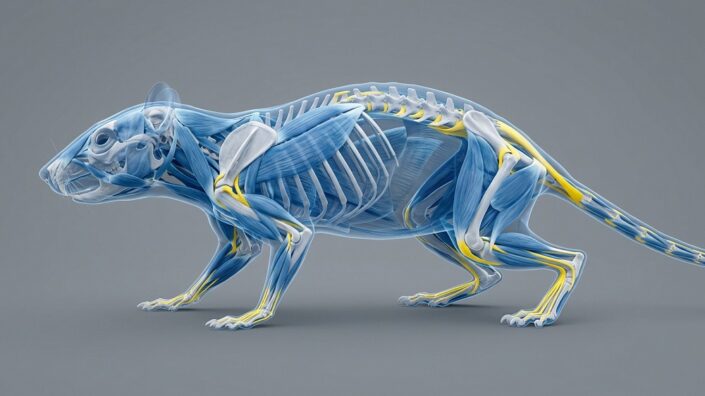
Research Identifies Mechanism to Strengthen Tendons in Rats

Edited by Vita Solenne
Research & Biotech · Updated September 4, 2026
Recent research has revealed that an upstream promoter of two extracellular matrix proteins can enhance the healing and strength of tendons in rats. This finding is particularly relevant for understanding tendon injuries, which are common in older populations. The study suggests potential avenues for improving tendon health and recovery, which could have implications for longevity and overall health optimization.
Share this story
Why it matters
- ✓Improving tendon strength and healing could reduce the risk of injuries in older adults, promoting greater mobility and quality of life.
- ✓Understanding the role of extracellular matrix proteins may lead to new treatments or therapies that enhance recovery from tendon injuries.
- ✓This research highlights the importance of cellular mechanisms in maintaining tissue health, which is crucial for longevity.
Research Identifies Mechanism to Strengthen Tendons in Rats
Recent studies have shed light on the mechanisms that contribute to tendon strength and healing, particularly in the context of aging. Researchers have discovered that an upstream promoter of two extracellular matrix proteins plays a significant role in enhancing the healing capabilities of tendons in rats. This finding could have important implications for health optimization and longevity, especially for older adults who are more susceptible to tendon injuries.
Understanding Tendon Injuries in Older Adults
Tendon injuries are a common concern as people age, often leading to decreased mobility and quality of life. The extracellular matrix (ECM) is a critical component of tendon structure, providing the necessary support and strength for tendons to function effectively. As individuals age, the composition and function of the ECM can deteriorate, which may contribute to the increased incidence of tendon injuries.
The Role of Extracellular Matrix Proteins
The recent research focuses on two specific extracellular matrix proteins that are influenced by an upstream promoter. These proteins are essential for maintaining the structural integrity of tendons. By enhancing the expression of these proteins, researchers found that the healing process in tendons was significantly improved in rat models. This suggests that targeting the ECM could be a viable strategy for promoting tendon health and recovery.
Implications for Longevity and Health Optimization
The findings from this study are particularly relevant for individuals pursuing longevity and health optimization. Here are a few key implications:
- Reduced Injury Risk: By improving tendon strength and healing, older adults may experience fewer injuries, which can lead to a more active lifestyle and better overall health.
- Potential Therapeutic Approaches: Understanding the mechanisms that enhance tendon healing could pave the way for new treatments or therapies aimed at improving recovery from injuries, particularly in aging populations.
- Focus on Cellular Health: This research underscores the importance of cellular mechanisms in maintaining tissue health, a critical factor for longevity. As we learn more about how to manipulate these mechanisms, we may be able to develop strategies that promote healthier aging.
Conclusion
While the research is still in its early stages and conducted in animal models, the implications of strengthening tendons through the manipulation of extracellular matrix proteins are promising. For longevity enthusiasts and health optimizers, this study highlights the potential for new approaches to enhance recovery and maintain mobility as we age. Continued research in this area may lead to innovative strategies that not only improve tendon health but also contribute to overall longevity and well-being.
Sources
Newsletter
Your weekly longevity signal. No spam.
Comments
Log in with
Loading comments…
More in Research

Renue by Science Launches Home-Based Health Research Community
Renue by Science has introduced the Renue Research Community, enabling consumers to participate in…
Just now

Advancements in Cancer Science: Prevention, Detection, and Treatment Insights from Siddhartha Mukherjee
In a recent discussion, Dr. Siddhartha Mukherjee highlighted the evolving understanding of cancer,…
6h ago

Age-Related Decline in Chapero
The latest Fight Aging! newsletter discusses the age-related decline observed in the Chapero, a…
23h ago
Exploring the Link Between Socioeconomic Status and Life Expectancy
A recent analysis investigates the correlation between socioeconomic status (SES) and life…
2d ago