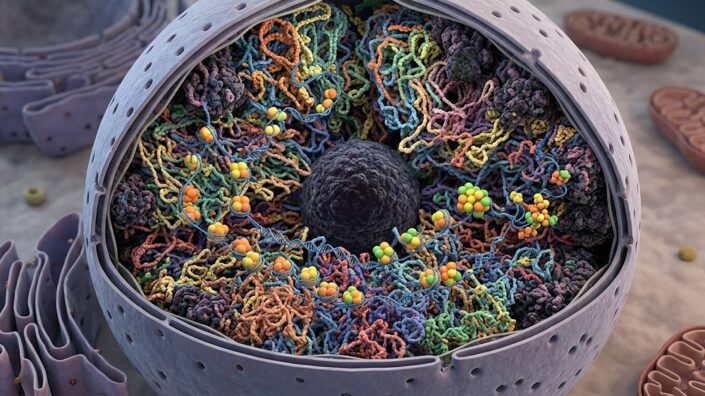
SIRT1 Stabilizes Human Genome by Suppressing Retrotransposition

Edited by Vita Solenne
Research & Biotech · Updated September 4, 2026
Recent research highlights the role of the sirtuin SIRT1 in maintaining genomic stability by inhibiting retrotransposition, a process that can lead to genomic instability. This discovery sheds light on the mechanisms through which SIRT1 may contribute to longevity and health optimization. Understanding SIRT1's function could inform strategies for enhancing healthspan and mitigating age-related diseases.
Share this story
Why it matters
- ✓SIRT1's role in stabilizing the genome may help reduce the risk of age-related diseases linked to genomic instability.
- ✓Enhancing SIRT1 activity could be a potential strategy for health optimizers and biohackers aiming to extend lifespan and improve overall health.
- ✓Insights into SIRT1's mechanisms may lead to the development of targeted therapies or lifestyle interventions that promote longevity.
A Mechanistic Explanation for SIRT1’s Effects
Introduction
Recent advancements in longevity research have shed light on the role of sirtuins, particularly SIRT1, in maintaining genomic integrity. SIRT1, a member of the sirtuin family of proteins, has been implicated in various biological processes, including aging, metabolism, and stress response. A recent study has elucidated how SIRT1 contributes to genomic stability by suppressing retrotransposition, a phenomenon that can lead to genomic instability.
Understanding Retrotransposition
Retrotransposition is a process where specific elements of the genome, known as retrotransposons, copy themselves and insert into new locations within the genome. This can disrupt normal gene function and lead to mutations, contributing to various diseases, including cancer. By understanding how SIRT1 suppresses this process, researchers are uncovering potential pathways to enhance genomic stability and longevity.
The Role of SIRT1 in Genomic Stability
The recent findings indicate that SIRT1 plays a crucial role in stabilizing the human genome. By inhibiting retrotransposition, SIRT1 helps maintain the integrity of genetic information. This stabilization is vital for preventing the accumulation of mutations that can occur as cells age, thereby reducing the risk of age-related diseases.
Mechanisms of Action
SIRT1's mechanism of action involves the regulation of various cellular pathways that are essential for maintaining genomic stability. It is known to deacetylate proteins that are involved in DNA repair and chromatin remodeling. This deacetylation process enhances the efficiency of DNA repair mechanisms, allowing cells to respond more effectively to DNA damage.
Implications for Longevity and Health Optimization
The implications of SIRT1's role in genomic stability are significant for those pursuing longevity and health optimization. Here are a few key points:
- Reduced Disease Risk: By stabilizing the genome, SIRT1 may help lower the risk of developing age-related diseases, such as cancer and neurodegenerative disorders. This is particularly relevant for individuals focused on extending their healthspan.
- Potential Therapeutic Targets: Understanding SIRT1's mechanisms opens up new avenues for developing targeted therapies that could enhance its activity. This could lead to interventions that promote longevity and improve health outcomes.
- Lifestyle Interventions: Knowledge of SIRT1's function may inform lifestyle choices that could naturally enhance SIRT1 activity, such as caloric restriction, exercise, and certain dietary components. These interventions could be integrated into health optimization strategies.
Conclusion
The discovery of SIRT1's role in suppressing retrotransposition and stabilizing the genome provides valuable insights into the biological mechanisms underlying aging and longevity. As research continues to unfold, it may pave the way for innovative approaches to enhance healthspan and mitigate age-related diseases. For health optimizers and biohackers, understanding and potentially harnessing the power of SIRT1 could be a key strategy in the quest for longevity and improved quality of life.
Sources
- A Mechanistic Explanation for SIRT1’s Effects — Lifespan.io
Newsletter
Your weekly longevity signal. No spam.
Comments
Log in with
Loading comments…
More in Research

Advancements in Cancer Science: Prevention, Detection, and Treatment Insights from Siddhartha Mukherjee
In a recent discussion, Dr. Siddhartha Mukherjee highlighted the evolving understanding of cancer,…
5h ago

Age-Related Decline in Chapero
The latest Fight Aging! newsletter discusses the age-related decline observed in the Chapero, a…
23h ago
Exploring the Link Between Socioeconomic Status and Life Expectancy
A recent analysis investigates the correlation between socioeconomic status (SES) and life…
2d ago

Blocking STING Helps Preserve Bone in Aging Mice
A recent study has identified a link between STING-mediated signals from marrow fat cells and…
2d ago