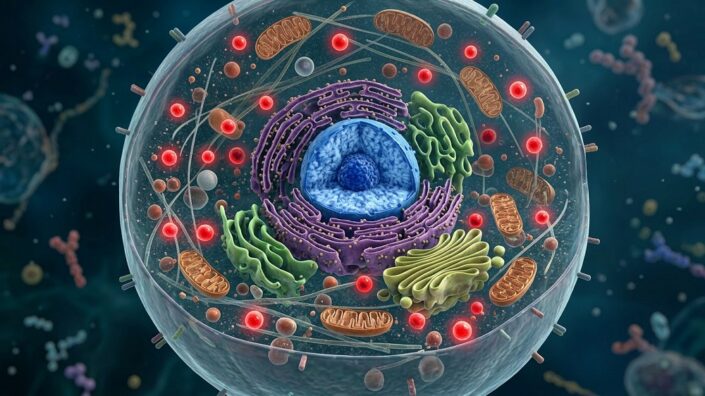
Study Reveals Link Between Declining Autophagy and Impaired Senescent Cell Clearance

Edited by Vita Solenne
Research & Biotech · Updated October 6, 2026
A recent study highlights the connection between age-related declines in autophagy and the body's ability to clear senescent cells. This impairment in cellular maintenance may contribute to the accumulation of senescent cells, which are linked to various age-related diseases. Activating specific pathways showed promise in reducing signs of cellular senescence.
Share this story
Why it matters
- ✓Understanding the role of autophagy in cellular maintenance can help health optimizers develop strategies to enhance longevity.
- ✓Improving senescent cell clearance may lead to better health outcomes and reduced risk of age-related diseases.
- ✓This research underscores the importance of cellular health and maintenance in the pursuit of longevity.
Declining Autophagy Impairs Senescent Cell Clearance
Introduction
A recent study published on Lifespan.io sheds light on the critical role of autophagy in cellular maintenance and its implications for aging. Autophagy, the process by which cells remove damaged components, is essential for maintaining cellular health. As we age, this process tends to decline, leading to a buildup of senescent cells—cells that have stopped dividing but remain metabolically active. This accumulation is linked to various age-related diseases, making the understanding of autophagy's role in senescent cell clearance particularly relevant for those interested in longevity and health optimization.
The Connection Between Autophagy and Senescent Cells
The study indicates that the age-related decline in autophagy directly impairs the immune system's ability to clear senescent cells. Senescent cells can contribute to inflammation and tissue dysfunction, which are hallmarks of aging. The research suggests that by activating specific pathways related to autophagy, it may be possible to reduce the signs of cellular senescence. This finding is significant as it opens up potential avenues for therapeutic interventions aimed at enhancing autophagy and improving health outcomes in older adults.
Implications for Longevity Enthusiasts
For individuals pursuing longevity and health optimization, this study underscores the importance of maintaining cellular health through autophagy. Here are a few key takeaways:
- Enhancing Autophagy: Strategies to boost autophagy, such as caloric restriction, intermittent fasting, and certain supplements, may help improve cellular maintenance and reduce the burden of senescent cells.
- Reducing Senescence: By focusing on the clearance of senescent cells, health optimizers may mitigate the negative effects associated with aging, potentially leading to a longer, healthier life.
- Research Opportunities: This study highlights the need for further research into the mechanisms of autophagy and its role in aging, which could lead to new interventions aimed at promoting longevity.
Conclusion
The link between declining autophagy and impaired senescent cell clearance presents an important area of research for those interested in longevity. As our understanding of these processes deepens, it may lead to innovative strategies for enhancing health and extending lifespan. By prioritizing cellular health and exploring ways to activate autophagy, individuals can take proactive steps towards optimizing their longevity and overall well-being.
As research continues to evolve, staying informed about the latest findings will be crucial for anyone looking to harness the power of cellular maintenance in the quest for a longer, healthier life.
Sources
- Declining Autophagy Impairs Senescent Cell Clearance — Lifespan.io
Newsletter
Your weekly longevity signal. No spam.
Comments
Log in with
Loading comments…
More in Research

Advancements in Cancer Science: Prevention, Detection, and Treatment Insights from Siddhartha Mukherjee
In a recent discussion, Dr. Siddhartha Mukherjee highlighted the evolving understanding of cancer,…
5h ago

Age-Related Decline in Chapero
The latest Fight Aging! newsletter discusses the age-related decline observed in the Chapero, a…
23h ago
Exploring the Link Between Socioeconomic Status and Life Expectancy
A recent analysis investigates the correlation between socioeconomic status (SES) and life…
2d ago

Blocking STING Helps Preserve Bone in Aging Mice
A recent study has identified a link between STING-mediated signals from marrow fat cells and…
2d ago