Transplanted Immune Cells Enhance Energy Production by Donating Mitochondria

Edited by Vita Solenne
Research & Biotech · Updated September 22, 2026
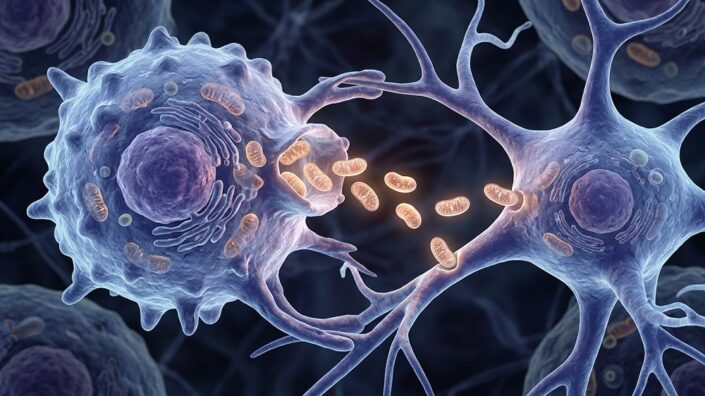
A recent study has revealed that transplanted immune cells can donate their mitochondria to neighboring cells, leading to improved energy production and cellular function. This discovery, made using a mouse model of a rare disease, highlights a potential mechanism for enhancing cellular health through immune cell transplantation.
Share this story
Why it matters
- ✓Understanding how immune cells can enhance mitochondrial function may lead to new therapies for age-related diseases and conditions associated with mitochondrial dysfunction.
- ✓This research opens up possibilities for leveraging immune cell therapy to improve energy levels and overall health in individuals pursuing longevity.
- ✓The findings could inform future biohacking strategies aimed at optimizing cellular health and energy production.
Transplanted Immune Cells Enhance Energy Production by Donating Mitochondria
Introduction
Recent research has unveiled a fascinating mechanism by which transplanted immune cells can contribute to the health of neighboring cells. According to a study conducted on a mouse model of a rare disease, these immune cells are capable of donating their mitochondria to adjacent donor cells, resulting in improved energy production and enhanced cellular function. This discovery could have significant implications for the fields of longevity and health optimization.
The Role of Mitochondria
Mitochondria, often referred to as the powerhouses of the cell, are essential for energy production. They convert nutrients into adenosine triphosphate (ATP), the energy currency of the cell. Mitochondrial dysfunction is a hallmark of various age-related diseases, including neurodegenerative disorders, metabolic syndromes, and cardiovascular diseases. Therefore, understanding how to enhance mitochondrial function is crucial for promoting longevity and overall health.
Study Overview
The study in question utilized a mouse model to investigate the effects of transplanted immune cells on neighboring cells. The researchers found that these immune cells not only survive post-transplantation but also actively transfer their mitochondria to nearby cells. This transfer appears to rescue energy production in the recipient cells, which is particularly important in the context of diseases characterized by mitochondrial dysfunction.
Mechanism of Mitochondrial Donation
The precise mechanisms behind the mitochondrial donation process are still being explored. However, it is hypothesized that the immune cells release mitochondria through vesicles or direct cell-to-cell contact. This process not only boosts the energy levels of the neighboring cells but may also enhance their overall functionality, potentially offering a therapeutic avenue for conditions where cellular energy deficits are a concern.
Implications for Longevity Enthusiasts
For individuals focused on longevity and health optimization, the findings from this study present several intriguing possibilities:
- Therapeutic Applications: The ability of immune cells to enhance mitochondrial function could lead to novel therapies aimed at treating age-related diseases and conditions associated with mitochondrial dysfunction. This could be particularly beneficial for those looking to maintain energy levels and overall health as they age.
- Biohacking Strategies: Understanding the mechanisms of mitochondrial donation could inspire new biohacking strategies that leverage immune cell therapy to optimize cellular health. This could include exploring ways to enhance the efficacy of immune cell transplants or developing protocols to stimulate mitochondrial transfer in existing cells.
- Research Directions: The study opens up new avenues for research into the role of immune cells in cellular health. Future studies could investigate how to harness this mitochondrial donation process in clinical settings, potentially leading to breakthroughs in regenerative medicine and longevity research.
Conclusion
The discovery that transplanted immune cells can donate mitochondria to neighboring cells represents a significant advancement in our understanding of cellular health and energy production. As researchers continue to explore the implications of this finding, it holds promise for developing innovative therapies aimed at enhancing mitochondrial function and promoting longevity. For health optimizers and biohackers, this research underscores the importance of cellular health in the pursuit of a longer, healthier life.
Sources
Newsletter
Your weekly longevity signal. No spam.
Comments
Log in with
Loading comments…
More in Biotech

Fractyl Revita Shows Promise in Reducing Weight Regain After GLP-1 Therapy
Fractyl Health has announced positive results from the REMAIN-1 pivotal study, which evaluated the…
Just now

Exploring the Connection Between Big Pharma and Gray-Market Peptides
A recent analysis reveals significant ties between the pharmaceutical industry and gray-market…
2d ago
Kailera Completes Enrollment for Obesity Trials, Results Expected in 2028
Kailera has completed enrollment for its three Phase 3 trials of ribupatide, a weekly injection…
2d ago
Longeveron’s Stem Cell Therapy Shows Promise for Reducing Brain Inflammation in Alzheimer’s Patients
Longeveron has released new preclinical data suggesting that its stem cell therapy may lead to…
2d ago