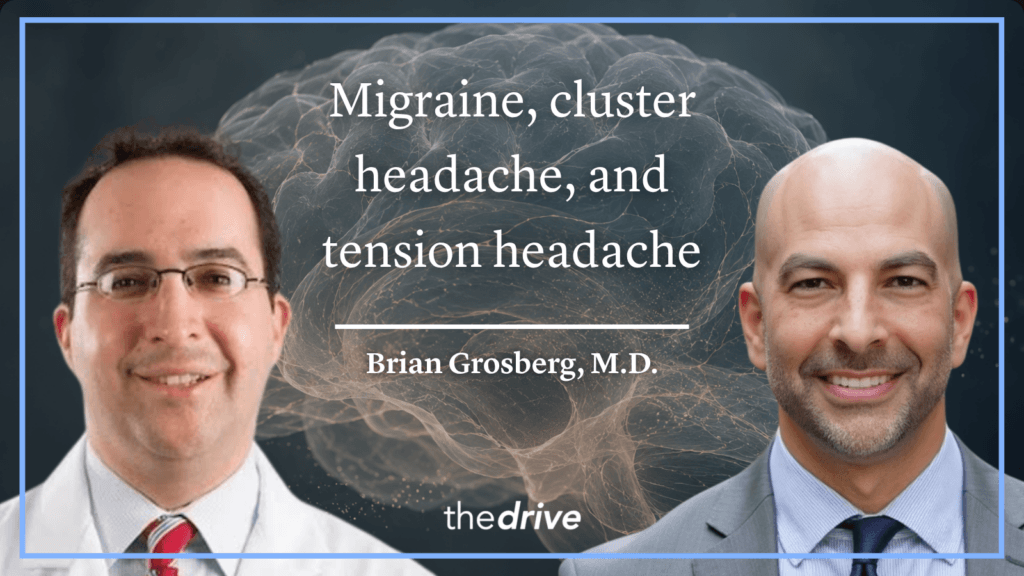
Understanding Headaches: Insights from Dr. Brian Grosberg

Edited by Mira Quellan
Nutrition & Mindset · Updated September 26, 2026
Dr. Brian Grosberg discusses the symptoms, causes, prevention, and treatment of migraines, cluster headaches, and tension headaches. He emphasizes the importance of keeping a headache log to empower patients in their treatment journey. Lifestyle factors play a crucial role in managing these conditions, which can significantly impact overall health and well-being.
Share this story
Why it matters
- ✓Headaches can severely affect quality of life, making effective management essential for health optimization.
- ✓Understanding triggers and lifestyle factors can help individuals minimize headache occurrences, contributing to better overall health.
- ✓Empowerment through self-monitoring can lead to more effective communication with healthcare providers, improving treatment outcomes.
Understanding Headaches: Insights from Dr. Brian Grosberg
Headaches are a common ailment that can significantly affect daily life. In episode #406 of Peter Attia's podcast, Dr. Brian Grosberg, a specialist in headache medicine, sheds light on the different types of headaches, including migraines, cluster headaches, and tension headaches. He discusses their symptoms, causes, prevention strategies, and treatment options, providing valuable insights for those seeking to optimize their health and longevity.
Types of Headaches
Dr. Grosberg categorizes headaches into three main types:
-
Migraines: Characterized by severe, throbbing pain, often accompanied by nausea, vomiting, and sensitivity to light and sound. Migraines can last from a few hours to several days and may be triggered by various factors, including hormonal changes, certain foods, stress, and environmental factors.
-
Cluster Headaches: These are less common but extremely painful headaches that occur in cyclical patterns or clusters. They typically manifest as intense pain around one eye and can be accompanied by other symptoms such as nasal congestion and restlessness. Cluster headaches can last from 15 minutes to three hours and often occur at the same time each day.
-
Tension Headaches: The most common type of headache, tension headaches are often described as a dull, aching sensation all over the head. They can be triggered by stress, poor posture, and muscle tension. Unlike migraines, tension headaches do not usually cause nausea or vomiting.
Symptoms and Causes
Understanding the symptoms and causes of these headaches is crucial for effective management. Dr. Grosberg emphasizes the importance of recognizing individual headache patterns and triggers. Keeping a detailed log of headache occurrences can help patients identify what factors may be contributing to their headaches, such as:
- Dietary choices (e.g., caffeine, alcohol, processed foods)
- Sleep patterns
- Stress levels
- Physical activity
By documenting these details, patients can provide their healthcare providers with valuable information that can lead to more tailored treatment plans.
Prevention Strategies
Dr. Grosberg highlights that prevention is key in managing headaches. Some effective strategies include:
- Lifestyle Modifications: Regular exercise, adequate hydration, and a balanced diet can help reduce headache frequency and intensity. Maintaining a consistent sleep schedule is also crucial.
- Stress Management: Techniques such as mindfulness, meditation, and yoga can help alleviate stress, a common trigger for headaches.
- Avoiding Triggers: Identifying and avoiding known headache triggers can significantly reduce the likelihood of experiencing headaches.
Treatment Options
Treatment for headaches varies depending on the type and severity. Dr. Grosberg discusses several options:
- Over-the-Counter Medications: Nonsteroidal anti-inflammatory drugs (NSAIDs) like ibuprofen or acetaminophen can be effective for mild to moderate headaches.
- Prescription Medications: For more severe headaches, especially migraines and cluster headaches, prescription medications may be necessary. These can include triptans for migraines or preventive medications for cluster headaches.
- Alternative Therapies: Some individuals find relief through acupuncture, biofeedback, or cognitive behavioral therapy (CBT).
The Importance of Empowerment
Dr. Grosberg stresses the importance of empowerment in managing headaches. By keeping a headache log and actively participating in their treatment, patients can enhance their communication with healthcare providers. This proactive approach can lead to better treatment outcomes and improved quality of life.
Conclusion
Headaches, whether migraines, cluster headaches, or tension headaches, can significantly impact an individual's quality of life. Understanding the symptoms, causes, and effective management strategies is essential for those pursuing longevity and health optimization. Dr. Grosberg's insights provide a roadmap for individuals to take control of their headache management, emphasizing the importance of lifestyle factors and self-empowerment in the journey towards better health.
Sources
Newsletter
Your weekly longevity signal. No spam.
Comments
Log in with
Loading comments…
More in Mindset

Telehealth Service Combines Menopause Care and Mental Health Support
Better U and Evernow have launched a nationwide telehealth service that connects menopause…
4d ago

Peter Attia Reflects on Evolving Perspectives on Health Strategies
In the latest AMA session, Peter Attia discusses how his views on various health optimization…
Oct 12
Taiwan Reframes Aging as an Economic Asset
Taiwan has officially become a super-aged society, with one in five citizens aged 65 or older. At…
Sep 26
Menopause and Its Impact on Brain Health
Menopause is not just a reproductive transition; it significantly affects brain, metabolic, and…
Sep 26